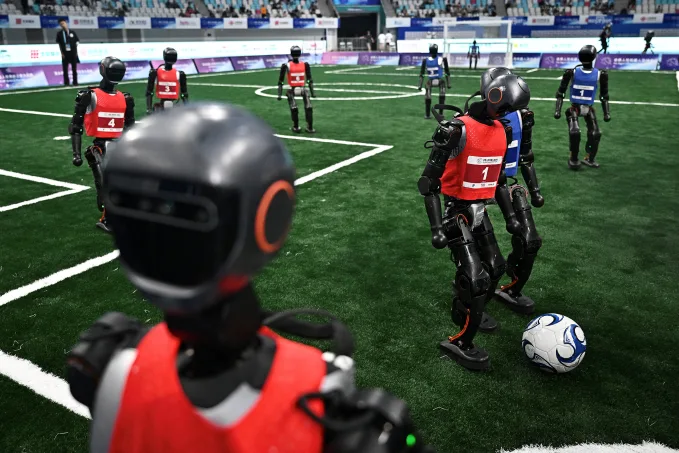

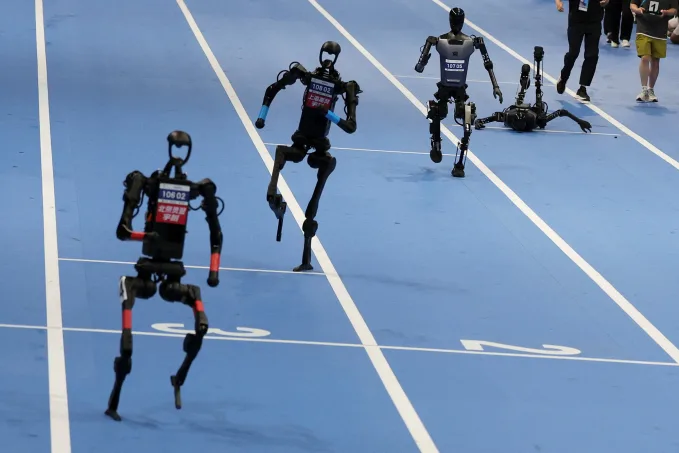
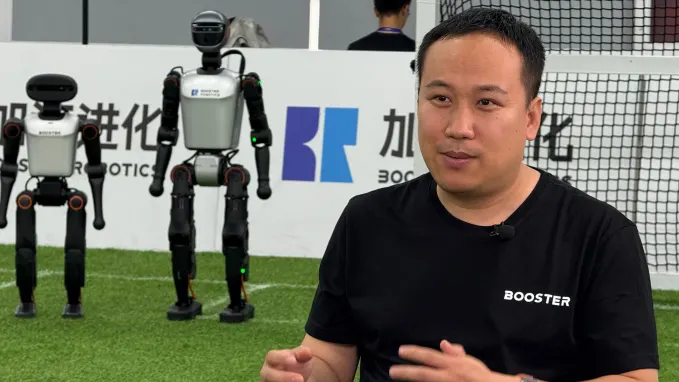
China’s rapidly growing robot sports scene is more than futuristic entertainment. What looks like novelty competitions—humanoid robots boxing, running, playing football, and performing martial arts—has become a serious technological proving ground. These events are now shaping the future of robotics and may ultimately determine how soon humanoid robots move from laboratories and arenas into everyday homes.
The Rise of Robot Sports in China
Over the past few years, China has transformed robot competitions into large-scale public spectacles. From humanoid athletic contests to robot soccer leagues and endurance races, these events attract engineers, startups, universities, and government-backed research teams. Stadium crowds, national television coverage, and viral online clips have turned robot sports into a cultural phenomenon.
Unlike traditional industrial robotics demonstrations, these competitions focus on humanoid robots, machines designed to move, balance, and react like humans. The emphasis is not just on speed or strength, but on coordination, decision-making, recovery from failure, and interaction with unpredictable environments.
Why Sports Matter for Robotics Development
Sports present one of the hardest challenges for robots. Unlike factory floors, athletic environments are chaotic and dynamic. Robots must adapt in real time, recover from falls, maintain balance, and respond to opponents or obstacles. These challenges mirror the exact difficulties robots would face in real-world human environments.
By competing in sports, humanoid robots are forced to improve:
Balance and locomotion
Vision and spatial awareness
Real-time decision-making
Durability and energy efficiency
In short, sports act as a fast-track testing ground for technologies needed far beyond entertainment.
What the Competitions Reveal
Despite impressive performances, the competitions also expose current limitations. Many robots still move slowly, overheat, stumble, or fail under pressure. Some require human intervention or controlled conditions to function properly. These shortcomings highlight how far humanoid robotics still has to go before widespread everyday use.
However, these failures are not setbacks—they are data points. Each fall, collision, or malfunction helps engineers refine hardware, software, and AI systems. The public nature of these competitions accelerates learning and innovation.
From Arenas to Living Rooms
The ultimate question is whether robot sports can truly lead to humanoid robots in homes. The answer is yes—but gradually.
The technologies refined in robot sports—movement, balance, perception, and autonomy—are directly applicable to household tasks. A robot that can run, dodge, and recover from a fall is closer to safely navigating a home environment, climbing stairs, carrying objects, or assisting humans.
China’s heavy investment in robotics, combined with a rapidly growing ecosystem of startups and research institutions, gives it a strong position to push humanoid robots toward commercial reality.
Realistic Timelines for Home Robots
In the near future, humanoid robots are more likely to appear in controlled environments such as warehouses, hospitals, hotels, and factories. These settings offer clearer rules and fewer safety risks.
Over the next five to ten years, more advanced service robots may enter homes in limited roles—cleaning, monitoring, fetching items, or providing basic assistance. Fully autonomous, affordable humanoid robots capable of handling complex household chores remain a long-term goal rather than an immediate outcome.
Why This Trend Matters
China’s robot sports craze is not just about spectacle or national pride. It is a strategic blend of entertainment, innovation, and industrial ambition. By turning robotics into a public competition, China is accelerating development, attracting investment, and normalizing the presence of humanoid machines in society.
While humanoid robots in every home are still years away, robot sports are helping close the gap between science fiction and reality—one competition at a time.