

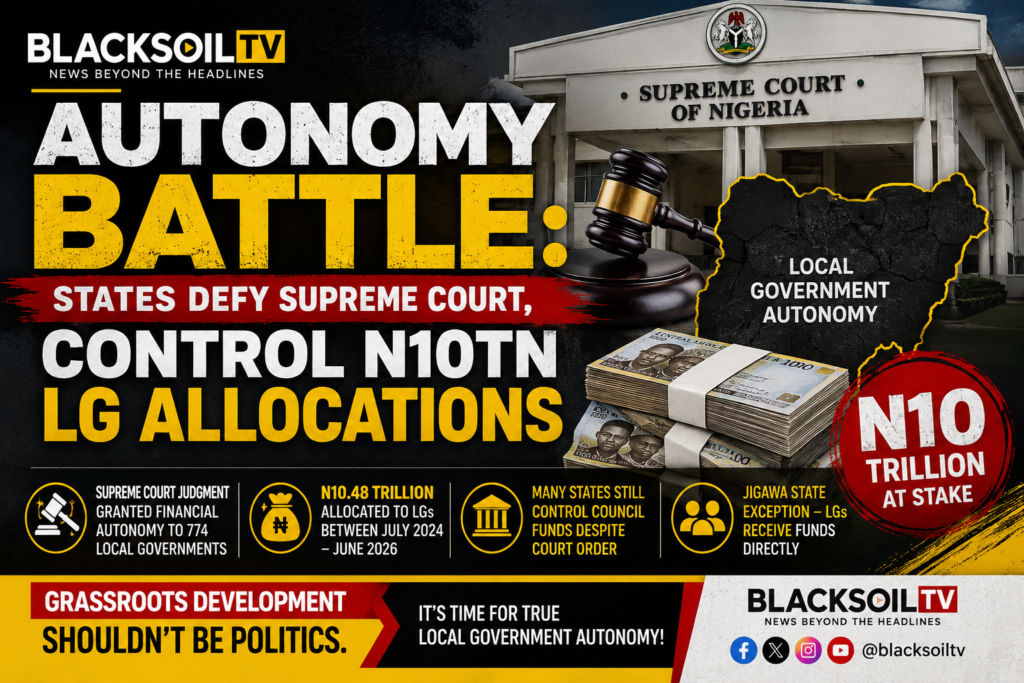
AUTONOMY BATTLE: STATES DEFY SUPREME COURT AS N10TN LG ALLOCATIONS REMAIN UNDER CONTROL
Nearly two years after the Supreme Court delivered a landmark judgment granting financial autonomy to Nigeria’s 774 local government areas, questions are mounting over the continued control of council funds by state governments. Between July 2024 and June 2026, local governments received allocations totalling about N10.48 trillion, yet findings indicate that many councils across the country are still not receiving their statutory allocations directly from the Federation Account. The Supreme Court had, in its July 11, 2024 judgment, ordered that allocations meant for democratically elected local governments be paid directly to them. The apex court also ruled against state governments retaining or spending funds belonging to councils and declared the administration of local governments by unelected caretaker committees unconstitutional. However, the expected financial revolution at the grassroots appears to have stalled. According to available allocation figures, local governments received about N4.496 trillion in the first 12 months following the judgment, while the figure increased to approximately N5.984 trillion in the following year — a rise of more than 33 per cent. Despite the significant increase, the National Union of Local Government Employees has maintained that full implementation of financial autonomy has yet to take effect nationwide. Reports from states including Kaduna, Kano, Benue, Sokoto and Plateau indicate that joint state-local government financial arrangements remain in operation, leaving many council administrations dependent on state authorities for access to funds. The development has renewed concerns over the ability of local governments to independently provide roads, healthcare facilities, schools, security support and other essential services desperately needed by communities. Jigawa State, however, has emerged as a notable exception, with officials claiming that its 27 local governments now receive allocations directly and operate independent accounts. The situation has now raised a bigger question: If over N10 trillion has been allocated to Nigeria’s local governments since the Supreme Court judgment, why are many councils still struggling to exercise genuine financial independence? For millions of Nigerians living at the grassroots, local government autonomy is more than a political or constitutional battle. It is about whether resources meant for their communities will finally translate into better roads, functioning health centres, improved schools, clean water and meaningful development. As the controversy continues, pressure is expected to mount on the Federal Government and relevant institutions to ensure that the judgment of Nigeria’s highest court is fully implemented. The battle for local government autonomy is far from over — and Nigerians are watching.
BLACKSOILTV News Beyond the Headlines.