

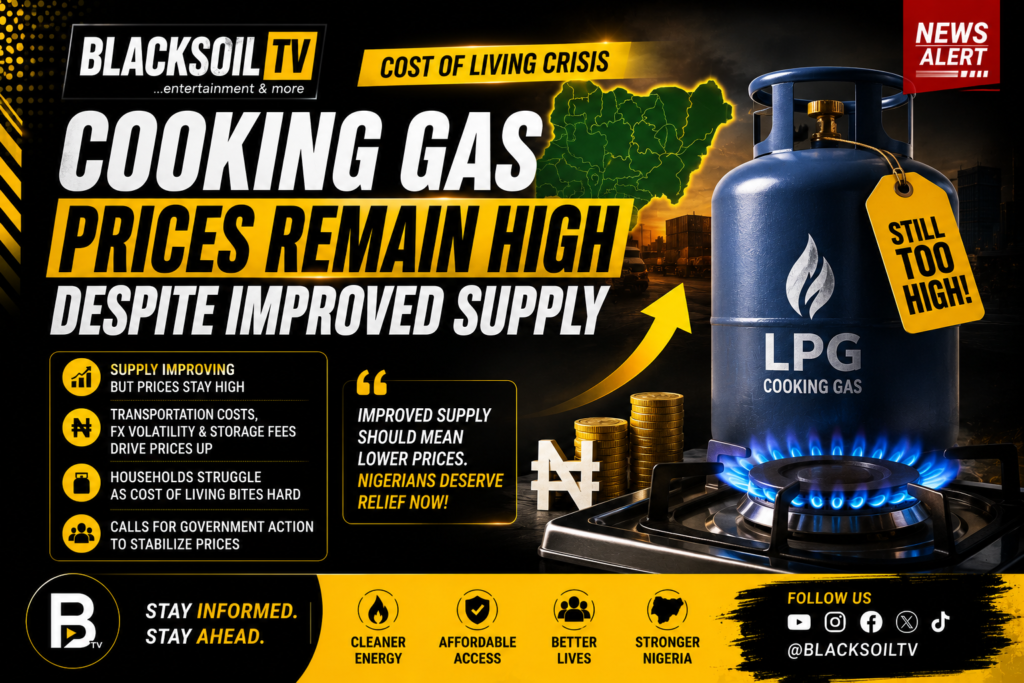
Cooking Gas Prices Remain High Despite Improved Supply
Despite signs of improved availability of Liquefied Petroleum Gas (LPG), commonly known as cooking gas, many Nigerian households continue to grapple with high refill prices, raising concerns about affordability and the rising cost of living.
Over the past few months, industry stakeholders have reported a steadier supply of LPG across the country, driven by increased local production, improved import logistics and stronger distribution networks. Under normal market conditions, better supply would be expected to ease prices. However, that has not yet translated into significant relief for consumers.
Market surveys across several Nigerian cities show that many residents are still paying considerably more to refill their gas cylinders than they did a year ago. Dealers attribute the persistent high prices to a combination of factors, including transportation costs, foreign exchange volatility, storage expenses and distribution charges. These costs, they say, continue to push up retail prices even when product availability has improved.
Energy experts also point to infrastructure challenges within the LPG value chain. While supply has become more stable, bottlenecks in moving products efficiently from depots to retail outlets continue to increase operational expenses. Rising diesel prices used for transportation and logistics have further added to the burden, making it difficult for marketers to lower prices.
For millions of Nigerian families, the high cost of cooking gas is forcing difficult decisions. Some households have reduced their gas consumption, while others have returned to using charcoal, firewood or kerosene—alternatives that are often less efficient and can pose greater health and environmental risks.
Consumer groups have called on the government to strengthen policies that encourage local LPG production, expand storage and distribution infrastructure and improve access to foreign exchange for industry operators. They argue that such measures could help stabilise prices and make clean cooking energy more affordable for ordinary Nigerians.
Industry players remain optimistic that prices could gradually decline if transportation costs ease, exchange rates become more stable and investments in the gas distribution network continue. However, they caution that meaningful price reductions will depend on broader economic improvements rather than supply alone.
As Nigeria continues to promote cleaner household energy, the affordability of cooking gas remains a critical issue. While improved supply is a positive development, consumers say the real measure of success will be when lower prices are reflected at refill stations, providing much-needed relief to families already struggling with rising living costs.