

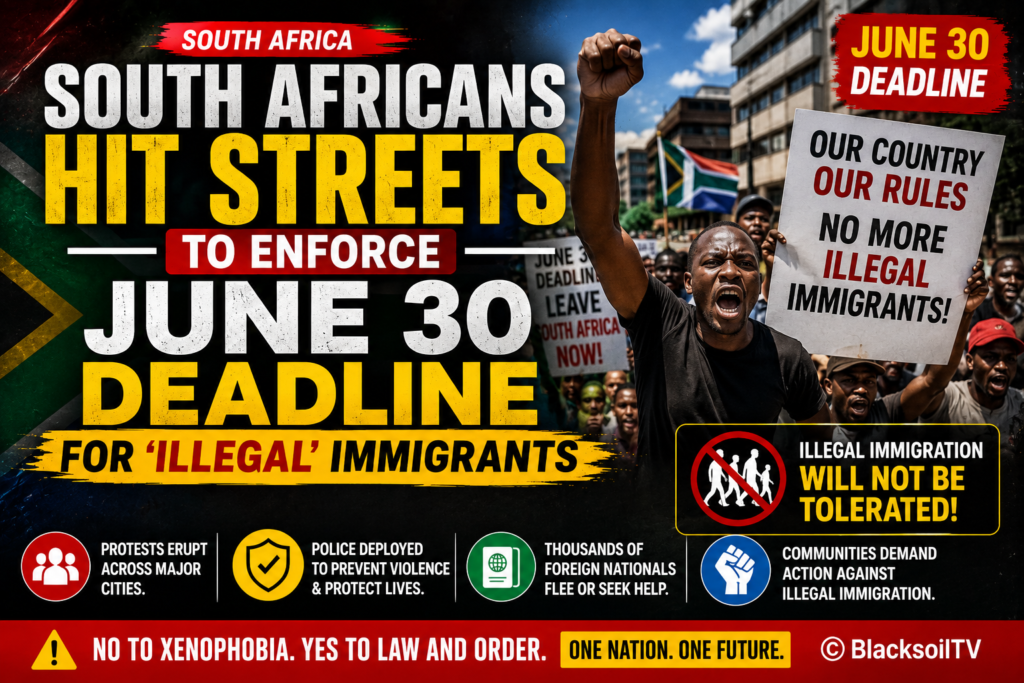
Thousands of South Africans took to the streets on June 30 to demand the removal of undocumented immigrants, following an unofficial deadline set by anti-immigration groups for those living in the country without legal status to leave. The protests, which took place in major cities including Johannesburg, Durban and Pretoria, were accompanied by a heavy police presence amid fears of violence and xenophobic attacks.
The demonstrations were organised by activist groups that accuse undocumented migrants of contributing to unemployment, crime and pressure on public services. Protest leaders insisted their campaign was directed at illegal immigration rather than foreign nationals in general. However, human rights organisations warned that both documented and undocumented migrants have been caught up in the unrest, forcing many to flee their homes or seek shelter.
Ahead of the protests, thousands of foreign nationals reportedly left South Africa or sought assistance from their embassies and consulates over fears of possible attacks. Businesses owned by migrants remained closed in several communities, while schools and public transport services were disrupted in some areas. Authorities deployed additional police officers and security personnel to prevent widespread violence and protect lives and property.
President Cyril Ramaphosa appealed for calm, stressing that while concerns about illegal immigration should be addressed, no individual or group has the authority to enforce immigration laws through intimidation or violence. He warned against vigilantism and urged citizens to allow law enforcement agencies to carry out their responsibilities.
The protests have reignited concerns over xenophobia in South Africa, a country that has witnessed repeated attacks on foreign nationals over the years. Analysts say lasting solutions will require stronger border management, economic reforms and regional cooperation, while ensuring the rights and safety of all residents are protected under the law.